
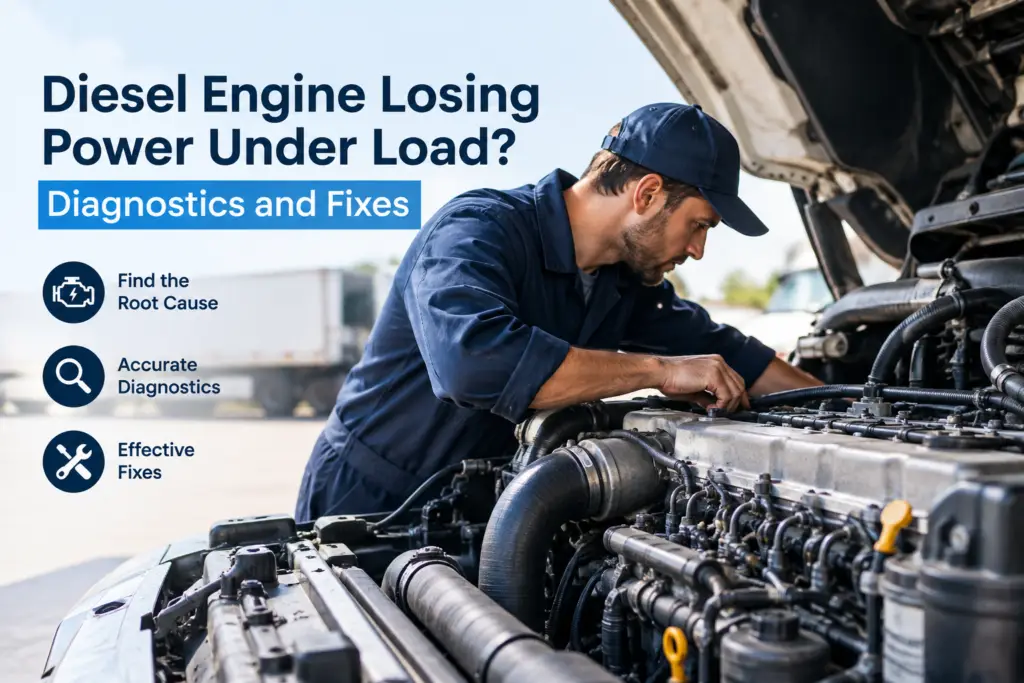
A diesel engine that loses power under load may seem fine at idle but struggles when you accelerate, climb a hill, or tow a trailer. There can be several reasons for this, including fuel delivery problems, restricted air intake, turbocharger faults, injector issues, DPF or EGR problems, and faulty sensors. Since different faults can cause similar symptoms, it is important to diagnose the problem before replacing any parts.
This guide covers common causes, diagnostic steps, repairs, and ways to prevent power loss.
Why Is Your Diesel Engine Facing Power Loss?
A diesel engine may run normally at idle or during light driving but struggle when demand increases. Under load, it needs more fuel and sufficient airflow to maintain efficient combustion. If fuel delivery is restricted, the engine may not receive enough diesel. A blocked intake, a boost leak, or a turbocharger fault can similarly reduce the air available for combustion.
Problems with the exhaust can also hurt performance. If the DPF is blocked, exhaust pressure builds up and makes it harder for gases to escape. Electrical or ECU problems can cause the engine to lose power if sensors detect an issue or a reading outside normal limits.
Common Causes
Fuel System Problems
Fuel system faults are a common engine problem when a diesel engine starts losing power under load. A clogged fuel filter can restrict diesel flow, especially when more fuel is needed. A weak fuel pump can also struggle to keep the pressure up.
Dirty or contaminated diesel may cause difficulties with fuel delivery, combustion, and injector operation. If the fuel pressure is low, this can result in a loss of power, and if the injectors are defective, they may not deliver the correct quantity or atomisation of fuel.
Fuel pressure and supply should be checked against the manufacturer’s specifications before components are replaced. This helps determine whether the problem is caused by a filter, pump, or injector.
Air Intake and Turbocharger Issues
A blocked air filter can reduce the air entering the engine and cause slow acceleration. The same can happen if the air intake is restricted. It is also worth checking the intake hoses for cracks, loose connections or other damage.
Turbocharger problems can become more noticeable under load because the engine relies on boost for additional air. Boost leaks from a cracked turbocharger or intercooler hoses can reduce pressure. A damaged turbocharger or low boost pressure may also cause reduced power, smoke or unusual noises.
DPF, EGR and Exhaust Restrictions
A blocked DPF can stop exhaust gases from flowing properly and cause the engine to lose power. If the DPF does not regenerate properly, soot can build up inside it. Carbon buildup can also cause the EGR valve to stick or stop working properly.
A faulty or stuck EGR valve can interfere with exhaust gas recirculation and affect combustion. More generally, restricted exhaust flow can make the engine feel weak when greater power is required.
How to Diagnose a Diesel Engine Losing Power
A logical diagnostic process can help identify the underlying fault instead of relying on symptoms alone.
Check for Warning Lights and Fault Codes
Check the dashboard warning lights and use a scanner to retrieve the ECU trouble codes, as these could indicate problems with fuel pressure, boost, DPF, EGR, or sensors. Use the fault codes as diagnostic hints, then verify the issue through additional testing.
Inspect Fuel and Air Systems
Check the fuel filter and the fuel supply for any blockage or contamination. Check the air filter and the intake hoses to make sure they are not obstructed or damaged. Also inspect the hoses connected to the turbocharger and the intercooler for any cracks, splits, loose fittings, or leaks.
Test Fuel Pressure and Boost
Make sure the fuel pressure stays within the recommended range under load, and compare the actual boost levels with the specified values; these tests verify that the engine is getting the right amount of fuel and air. Correct testing will pinpoint the real cause of the problem and avoid the need to replace unnecessary parts.
How to Fix Diesel Engine Power Loss
The appropriate repair depends on the diagnostic result. Possible repairs include:
- Replace a blocked fuel filter.
- Repair fuel or boost leaks.
- Service or replace faulty injectors where testing confirms a problem.
- Repair turbocharger-related problems.
- Clean or service EGR components where appropriate.
- Diagnose DPF restriction and regeneration issues.
- Replace faulty sensors where testing confirms failure.
Parts should not be replaced without proper diagnosis. Testing the affected system first can help identify the actual cause and prevent unnecessary component replacement. If internal engine damage is identified, the benefits of engine rebuild vs engine replacement should also be considered when choosing the most suitable repair approach.
For serious internal engine wear or damage, professional diesel engine reconditioning may be considered. The engine’s condition and extent of damage will help determine the right repair.
When Should You Get Professional Diesel Diagnostics?
It is a good idea to get professional help if your diesel engine keeps losing power or struggles under load. You should also have it checked if the engine goes into limp mode, a warning light comes on, there is excessive smoke, or you notice unusual turbo or engine noises.
Professional diesel diagnostics can help find the cause of the problem and avoid unnecessary repairs. Getting the issue checked early can also help stop a minor fault from becoming a more serious engine problem.
How to Prevent Power Loss
Regular servicing helps your diesel engine run well. Change fuel and air filters as needed, use high-quality diesel, check the turbocharger and intake components, keep the DPF in good shape, and address warning lights right away.
Conclusion
Losing power under load in a diesel engine can be caused by problems with fuel, air, turbocharging, exhaust, or electronics. That’s why it’s important to get an accurate diagnosis. Have a professional check your vehicle to find the problem and see if you need repairs or engine reconditioning.
If you are worried about how much a car engine rebuild costs in Australia, the answer depends on the vehicle, engine, and required repairs.
For professional advice and engine repair services, contact ARA Engine Reconditioning on (02) 9892 1033 and discuss your vehicle’s requirements with the team.