
Reconditioned Conrods
- Home
- Reconditioned Conrods
Professional Crack Detection & Engine Inspection
At ARA Engine Reconditioning, we specialise in professional crack detection for a wide range of engine components and applications. Our highly qualified technicians use advanced equipment and proven inspection techniques to identify imperfections that may affect the safety, reliability and performance of engine components.
We service engines across a broad range of applications, including cars, marine, construction, locomotive, agricultural and mining vehicles. By accurately identifying cracks and other imperfections, we can determine whether a component can be safely reconditioned or should be replaced, helping you avoid unnecessary repair costs and future engine failures.
- Advanced Engine Inspection
Accurate Crack Detection Using Advanced Technology
- Magnetic Particle Inspection
- Crack testing
- Fluorescent particle inspection
- Ultraviolet inspection
- Off-bench particle inspection
- Engine component assessment
Why Is Crack Detection Important?
Cracks are an early sign that a component is under excess stress. How a crack is formed will determine their severity, location and overall spread.
Most imperfections are caused by thermal stress, heavy loads, vibrations, metal bending and flexing.
Crack testing is done to find imperfections that pose a risk to the safety and performance of your vehicle. By doing this, we can determine whether an engine part can be reconditioned. This saves us time on trying to fix parts that are destined to fail and better off being replaced.
Not all cracks are visible to the naked eye, therefore, we locate hard-to-find cracks by doing a Magnetic Particle Inspection (MPI).
How Do We Test for Cracks?
MPIs are the cheapest, most effective way to find cracks on a ferrous engine part.
Crack detection involves magnetising the part for a few minutes, then applying tiny iron particles over it to see if they attract to any cracks, splits or abnormalities. The particles themselves are fluorescent and easy to see when viewed with an ultraviolet black light.
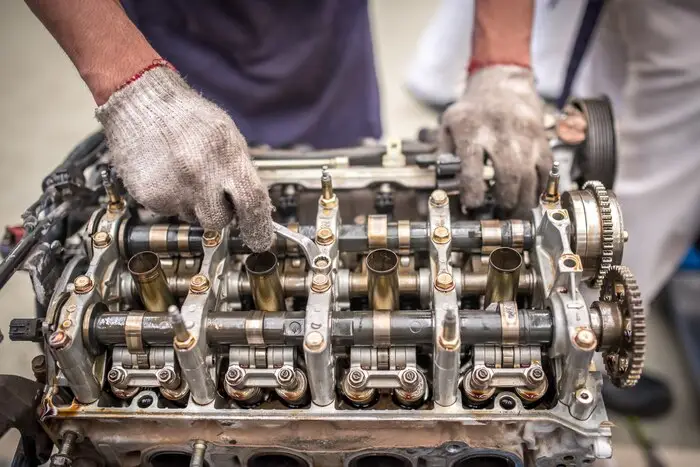
ARA Engine can perform a crack detection test to determine the condition of many ferrous engine parts. These include crankshafts, camshafts, axles, gears, cylinder heads and more. We can also do off-bench particle inspections for components that are too big for the machine itself.
- Why Choose Us
Crack Detection Experts Delivering Safety, Accuracy & Reliability
- Suitable for ferrous engine parts of any shape or size
- 2-3 year conditional warranty for commercial or private-use vehicles

Safe & Non-Destructive Testing
Advanced Inspection Technology
Wide Range of Components
30+ Years of Experience
Magmaster 4000 Crack Detection Equipment
Our Magmaster 4000 crack detection machine provides effective inspection capabilities for large and heavy engine components. The equipment can accommodate crankshafts up to 1750mm in length and weighing up to 300kg.
The machine also incorporates thermal protection and overload functions designed to prevent engine components from being exposed to damaging thermal stress or excessive loading during testing.
This combination of specialist equipment and experienced technicians allows us to carry out detailed crack detection while protecting the components being inspected.
- How We Work
Our Proven Crack Detection Process

Component Inspection & Preparation

Magnetic Particle Testing
Ultraviolet Inspection
Assessment & Recommendation
- Frequently Asked Questions